

When Love Came Draped in Ermine
Henry VIII’s Lavish Offerings to Anne Boleyn—and What Became of Them
In the glittering court of Henry VIII, love didn’t just whisper sonnets—it roared in rubies, furs, and country estates. To win Anne Boleyn’s heart (and perhaps her hand), the king spared no expense. His pursuit wasn’t paved with flowers—it was strewn with ermine-lined cloaks, strings of pearls, and handpicked homes for a future queen.
Let’s unwrap the royal romance… and the riches that came with it.
The Gifts that Wooed a Queen
Before Anne wore a crown, she wore jewels fit for one. Henry showered her with:
Exquisite Jewels: From garnet-studded brooches to elaborate French-influenced pendants, many were inscribed with loving mottos. A famous gift? A gold pendant shaped like an ‘H’ and ‘A’ entwined—an early Tudor monogram of obsession. Sumptuous Furs & Fabrics: Imported velvets, zibelline (sable tails, often worn draped across the shoulder), and rich materials from Italy. These weren’t just warm—they were statements. Majestic Beds & Furnishings: One such bed—allegedly made for Anne with grand canopy and silks—would later become symbolic in their quarrels. When their love turned cold, Henry reportedly snapped:
“I would not give her the bed to lie in again!”
Homes Fit for a (Future) Queen
Anne didn’t just receive trinkets—Henry gifted her entire properties, including:
Richmond Palace Lodgings: She was given rooms to entertain foreign dignitaries as early as the mid-1520s, showing her rising rank.
York Place (later Whitehall Palace): Originally Wolsey’s, seized by Henry and given to Anne. She oversaw renovations and hosted events as queen here—until her downfall.
What Became of the Bounty?
After her arrest in 1536, the gifts stopped glittering. Swift and brutal:
Jewels: Many of Anne’s pieces were reclaimed by the Crown and either passed to Jane Seymour or melted down. Homes: York Place continued as the main royal residence under Jane Seymour. Hever returned briefly to Anne’s family before being sold. Clothing and Furnishings: Inventories taken after her arrest listed “queenly” items—dresses, headdresses, and tapestries—all seized. Her carefully curated queen’s wardrobe was dismantled like her legacy.
Even love letters—once passionately written—were hidden away in the Vatican archives, preserved but silenced.
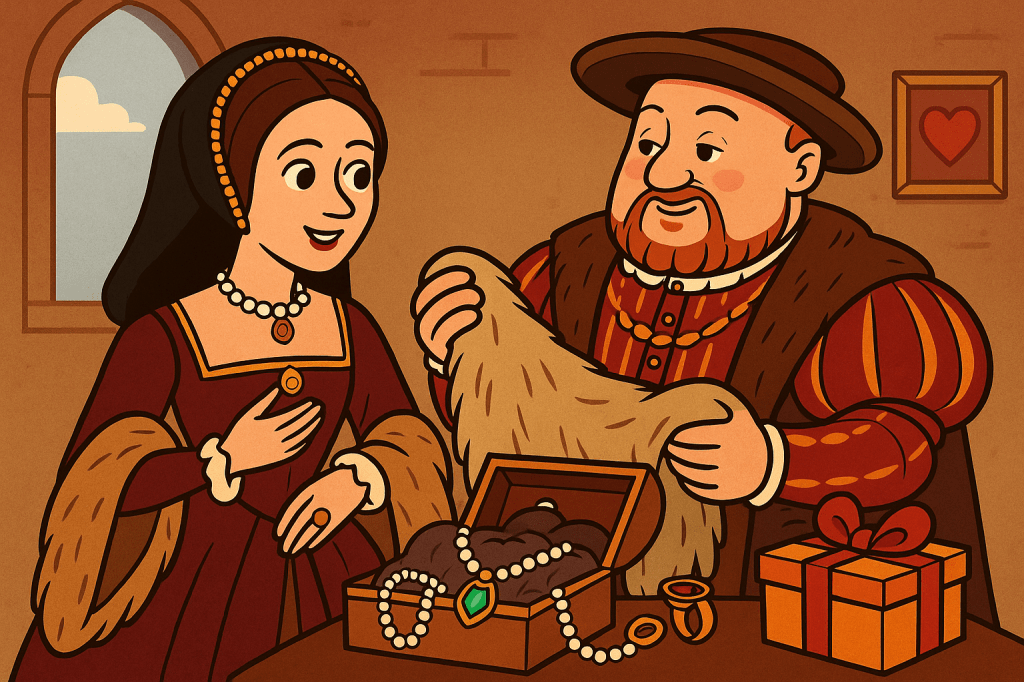
Henry’s gifts weren’t just tokens of affection—they were tools of elevation. Through them, Anne stepped from noblewoman to queen. But the same treasures that lifted her up were stripped away just as quickly, reminders of a love that could not protect her crown—or her head.
Because in Tudor England, a queen’s riches were never truly her own.


 crownedandcurious.blog