

She didn’t fall in love—she made it kneel.
Before the crown glinted in the sunlight…
Before the Tower gates clanged shut…
Before history etched her name in tragedy—
There was Anne.
Not yet queen. Not yet legend.
Just a girl with a laugh like lace and eyes that missed nothing.
A Heart Already Spoken For
Anne Boleyn’s story didn’t begin with a crown—it began with a promise. Before the grand politics, before Henry VIII’s obsession, there was Henry Percy—heir to the Northumberland title. Their love was youthful, genuine, and inconvenient.
They were secretly betrothed. But ambition, class, and Cardinal Wolsey crushed the match like a flower between pages. Percy was forced to marry another. Anne was sent away. And for the first time—but not the last—love would lose to politics.
And then came Thomas Wyatt, the court poet with a quill full of longing. He watched her from afar, his verses laced with desire, regret, and awe. Anne became his muse. To him, she was la plus belle des belles—the most beautiful of all. But his admiration would remain unfulfilled.
Anne’s heart was many things—ambitious, discerning, unrushed—but above all, it was her own.
The King and the Game
When Henry VIII noticed Anne, she didn’t flutter. She didn’t flinch.
She said no. Repeatedly.
Not out of indifference, but out of strategy.
She’d seen what happened to women who said yes.
She wouldn’t be his mistress.
She would be his queen.
And that made her irresistible.
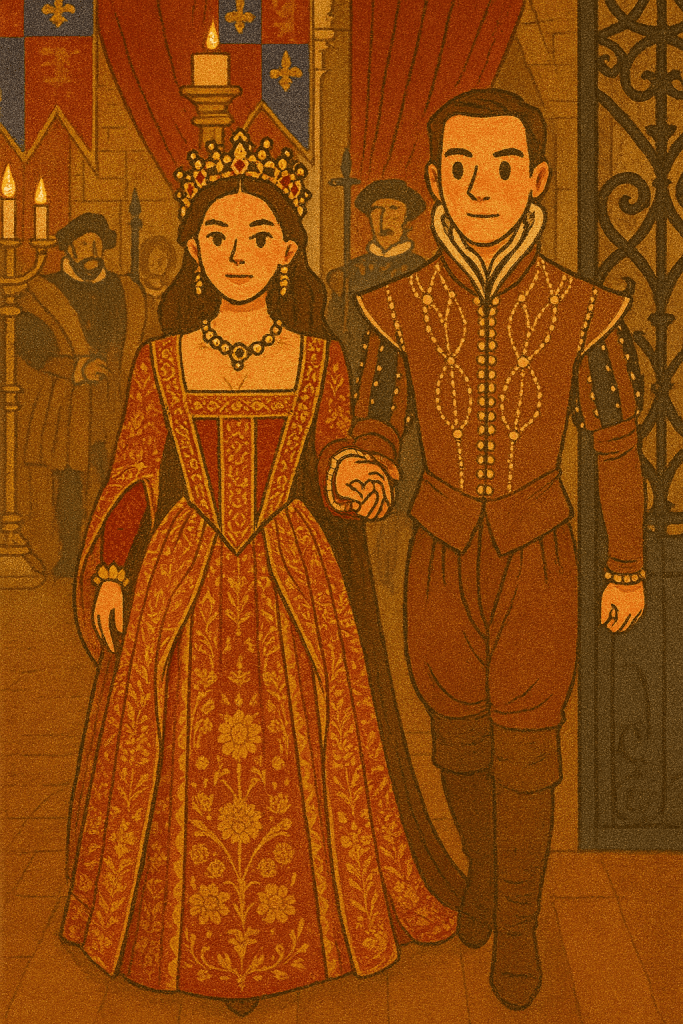
Their courtship began around 1525, and over the next seven years, Henry’s infatuation grew into obsession. Anne didn’t give herself easily—and that restraint became her power. She used the tools women were allowed: charm, silence, style, and yes—waiting.
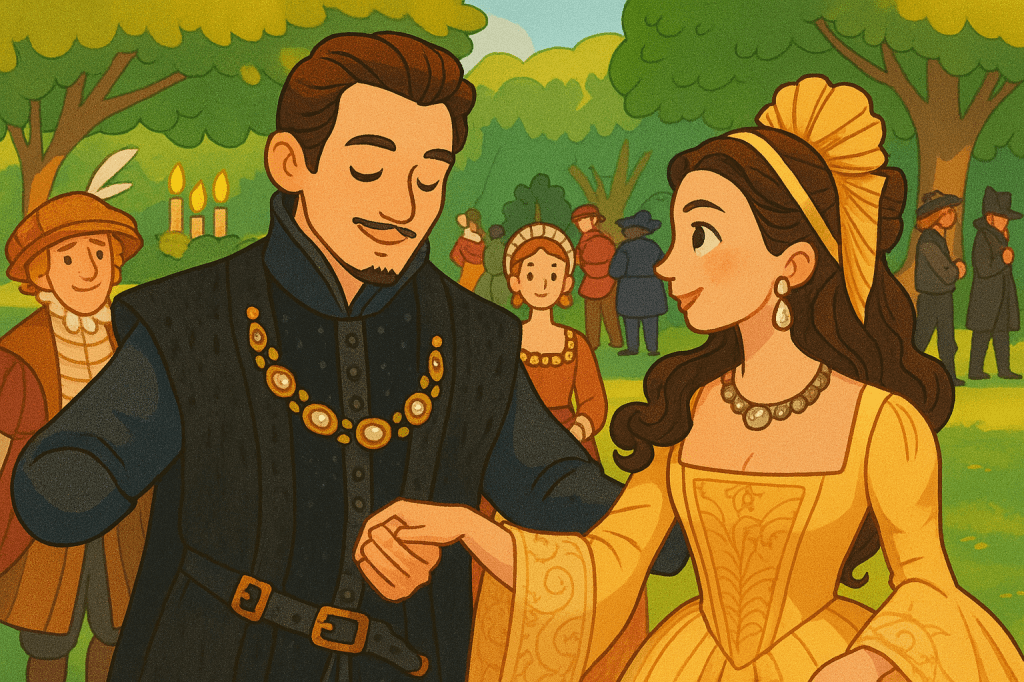
Court life became theatre. Banquets, hunts, jousts—all became stages for their unspoken drama. Anne wore yellow to stand out. Henry sent her gifts and wrote her desperate letters. Courtiers whispered. Factions formed.
And all the while, Katherine of Aragon still held the title of queen.
The Letters That Built a Reformation
Twenty-five of Henry’s love letters to Anne survive.
They’re not just romantic—they’re revealing.
He called her his “mistress and friend,” swore fidelity, and even grew jealous when she danced with other men.
In one, he writes:
“If you give yourself up to me, body and heart… I promise you that not only the name shall be yours, but that I shall take you for my only mistress, rejecting all others but you alone.”
—Henry VIII to Anne Boleyn
But Anne didn’t rush to reply.
She replied in silence.
She replied in waiting.
Her message was clear: If you want me, change the world.
And so he did.
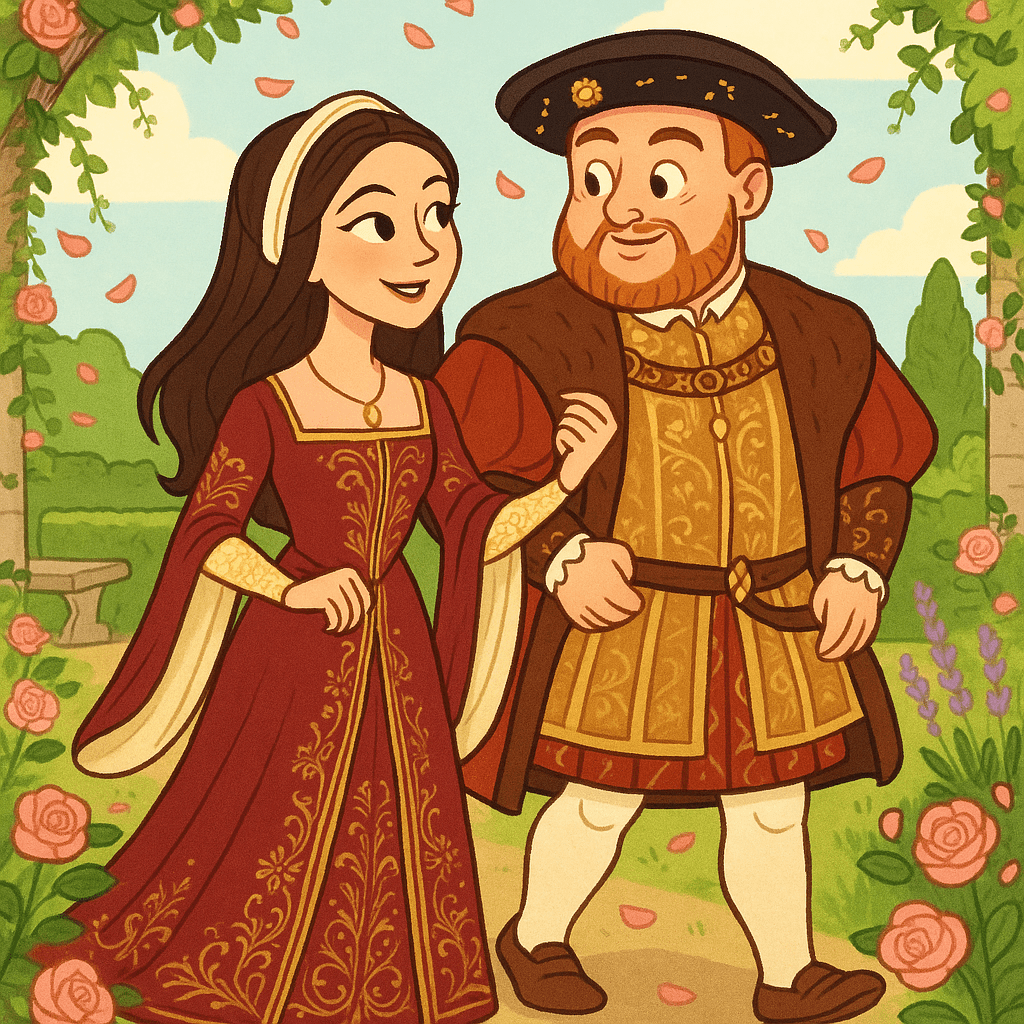
Unable to secure a divorce from the Pope, Henry broke from the Catholic Church and founded the Church of England—all to claim Anne.
History remembers the English Reformation as a religious revolution. But it was also a love story on fire.
A Wedding at Dawn
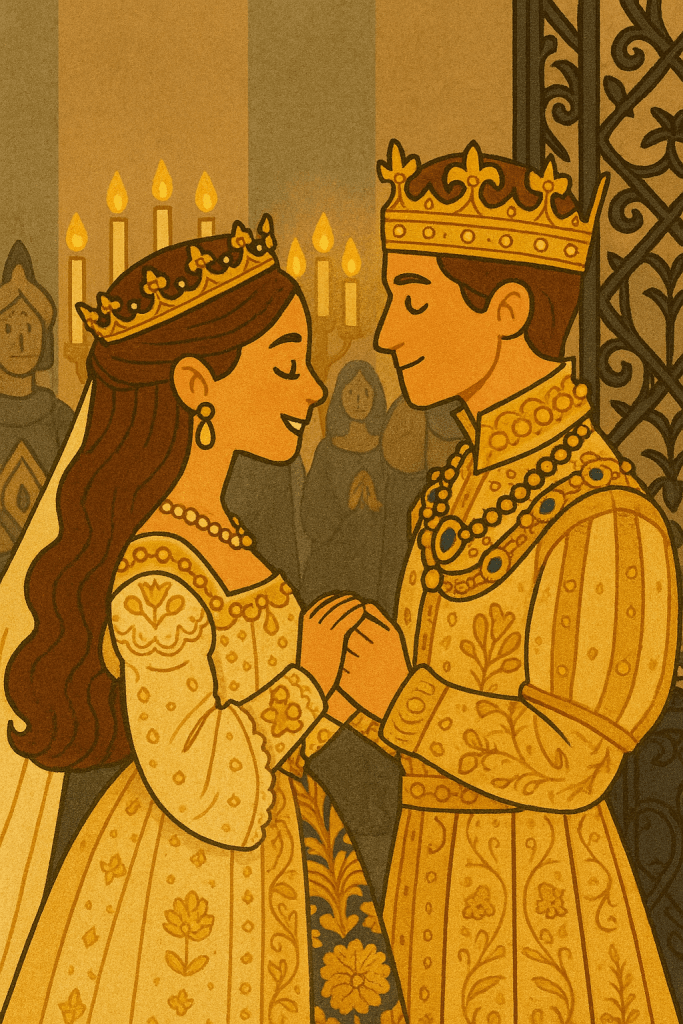
In January 1533, Henry and Anne married in secret at Whitehall Palace. It was early, private, and hurried. Anne was already pregnant, and they needed legitimacy.
This wasn’t the grand wedding of legend. But her coronation in June 1533? That was another story.
Anne became the first consort crowned with St. Edward’s Crown—a symbol previously reserved for monarchs. Her robes shimmered with ermine and gold. Her belly rounded with promise.
She wasn’t just the king’s wife.
She was his equal.
For a brief, dazzling moment, she had everything.
From Crown to Collapse
But queens weren’t crowned for love. They were crowned to deliver sons.
When Anne gave birth to Elizabeth, the disappointment was barely disguised. Henry tried to be gracious, but the pressure mounted. Anne suffered miscarriages. Rumors swirled. The court turned cold. And lurking in the wings was a quiet, pale lady-in-waiting named Jane Seymour.
By 1536, Henry’s love had soured.
Anne was arrested, charged with adultery, incest, and treason. The evidence was laughable. The motive was lethal.
On May 19th, she lost her crown.
Her freedom.
And her life.
History Remembers the Crown. But What About the Girl?
Anne Boleyn is remembered for her death—but what of her heart?
What of the girl who waited seven years instead of giving in?
Who read every gaze at court like a paragraph?
Who made a king beg, and made a crown part of her dowry?
Her love story wasn’t simple. It wasn’t sweet.
It was dangerous. Strategic. And real.
Maybe the great tragedy isn’t just how she died-
but how fiercely she loved, how bravely she waited,
and how much she lost trying to be loved on her terms.


 crownedandcurious.blog